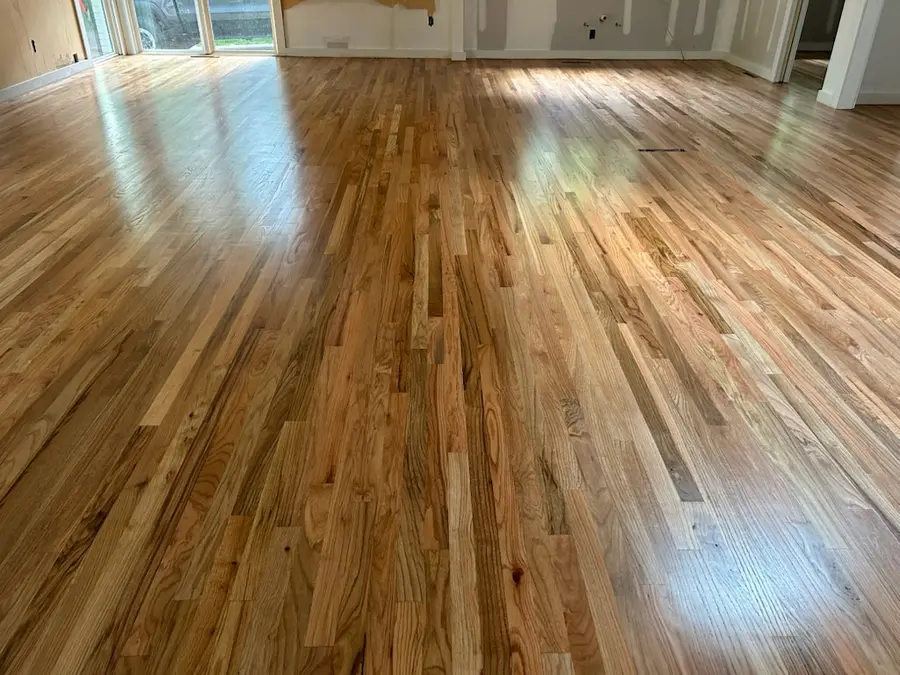
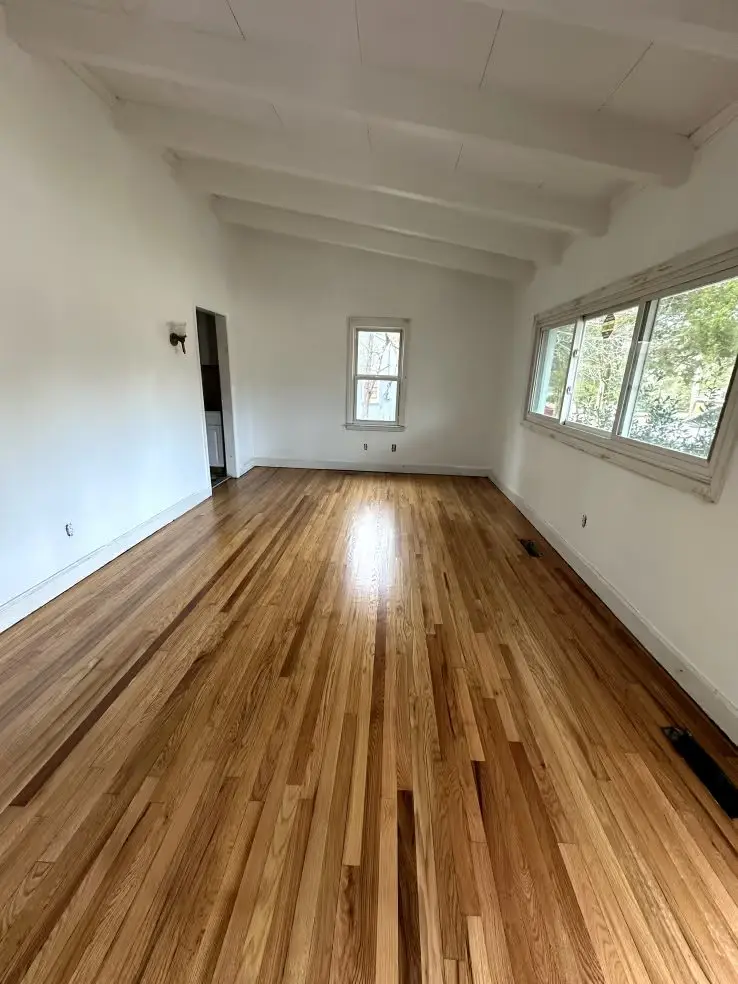
Worn hardwood looks worse than it usually is. Gray traffic lanes, dog scratches, sun fading and a finish that has gone cloudy can make a floor look finished in the bad sense. Most of the time the wood underneath is fine. The real question is how much wood is left and what condition the boards are in below the surface. Here's how we work that out on a walk-through, and how you can get a rough idea before anyone visits.
Start With What Kind of Floor You Have
Before anything else, we need to know what the floor is. Triangle homes have three common types, and each answers the refinish question differently.
| Floor Type | Can It Be Sanded? | What We Check |
|---|---|---|
| Solid hardwood (3/4 inch) | Usually yes, several times | Wood remaining above the tongue, nail exposure, cupping |
| Engineered hardwood | Sometimes, once or twice | Thickness of the real-wood wear layer |
| Prefinished solid with beveled edges | Yes, with extra sanding | Bevel depth and finish type |
| Laminate or vinyl | No | These have a printed layer, not wood |
A quick way to check at home: pull a floor vent cover and look at the edge of the board. Solid hardwood shows the same wood all the way through. Engineered shows a thin layer of wood over plywood. If you see a photo layer over fiberboard, it's laminate, and sanding isn't an option.
The Wood Above the Tongue
Standard solid hardwood has a tongue and groove milled into the edges. Everything above the tongue is the part that can be sanded. A typical 3/4 inch board has enough there for several full refinishes over its lifetime, as long as each sanding was done by someone who knew what they were doing.
That last part matters. An aggressive or uneven sanding can take far more wood than it needed to. We see floors where a previous crew left dips, chatter marks or heavy edger swirls, and every one of those removed wood that can't be put back. When we look at a floor, we check the thickness at vents and thresholds, look for exposed nail heads or tongues showing at the seams, and note any spots that were sanded through before.
Signs a Refinish Will Work
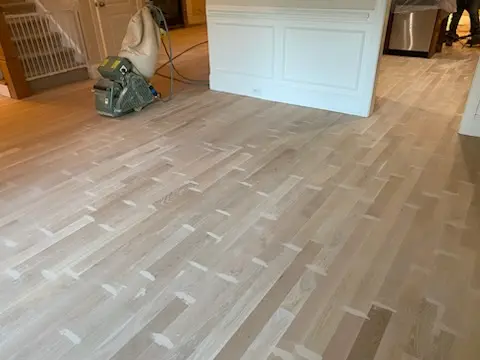
- Scratches, dull lanes and worn finish that sit on the surface.
- Fading or color change from sun, which disappears once the top layer is sanded off.
- Gaps between boards that are small and seasonal, which is normal wood movement in Triangle humidity.
- A few damaged boards in otherwise sound floor. Those get replaced individually before sanding.
- The floor is solid and quiet underfoot, or the squeaks can be fixed from above.
Signs It's Time to Replace
- Tongues or nail heads showing across large areas, meaning the floor has been sanded as far as it can go.
- Deep, widespread water damage, especially if the subfloor is soft or stained underneath.
- Severe cupping or crowning that keeps coming back because of a moisture problem under the house.
- Black stains from long-term pet urine that have gone deep into many boards.
- Engineered flooring with a wear layer too thin to sand.
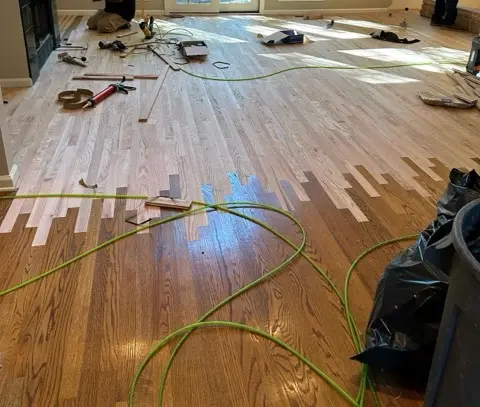
Even then, replacement doesn't always mean the whole house. If one room took water damage from a dishwasher, we can often cut out that section, fix the subfloor, weave in matching boards and refinish the whole level so the repair disappears.
The Cost Difference
In the Raleigh market, refinishing runs $3 to $5 per sq ft, with premium work reaching $8 or more. New site-finished solid hardwood runs $15 to $25 per sq ft. On a 600 sq ft main level, that's the difference between a few thousand dollars and well over ten thousand. Our Raleigh cost guide has the full breakdown.
That gap is why we take the refinish question seriously. If your floor can be saved, you should know it before you spend money replacing it. If it can't, you should know that too, before you pay for a refinish that won't hold up.
Not sure which one your floor needs? We'll look and tell you straight.
Get a free estimateWhat About Old Floors Under Carpet?
Plenty of Raleigh, Cary and Durham homes have oak hiding under wall-to-wall carpet. Those floors are often in better shape than the exposed ones because they've been protected for decades. Staple holes, tack strip marks and some padding residue are normal and come out with sanding or small repairs. If you're curious what's under yours, our guide to what you'll find under old carpet covers it.
Why We'll Tell You the Cheaper Answer
Eric Ferrer's family has been doing floors since the 1970s, and the business runs on referrals from more than 16,000 Triangle customers. Telling someone to replace a floor that only needed a refinish isn't how you build that. When you book an estimate, Eric or a member of his crew will check the floor in person and explain what they see. You can look through finished projects in our inspiration gallery, or read what homeowners in Chapel Hill and around the Triangle have said about the process.