Most flooring companies in the Triangle won't put a number in writing until somebody has sat on your couch for an hour. We think that's backwards. If you're planning a project, you deserve a ballpark before anyone shows up. This guide lays out the price ranges we see across the Raleigh market in 2026, explains why two quotes for the same room can be thousands of dollars apart, and shows you how to check any bid you get, including ours.
Raleigh-Market Price Ranges at a Glance
These ranges reflect published Raleigh-area cost guides and the market rates we see on real jobs. They're planning guidance, not a quote. The condition of your floor, the species, and the layout of your house decide where you land inside each range.
| Service | Typical Raleigh Range | What It Covers |
|---|---|---|
| Refinishing (sand, stain, finish) | $3 - $5 per sq ft (premium to $8+) | Sanding to bare wood, minor repairs, stain if chosen, protective finish coats |
| Whole-home refinish project | About $1,200 - $3,600 | Typical main-level living areas, halls and bedrooms |
| Solid hardwood install, turnkey | $15 - $25 per sq ft | Material, prep, acclimation, install, sanding and site finishing |
| Engineered hardwood install | $6 - $12 per sq ft | Material, prep and installation |
| Luxury vinyl plank install | $7 - $11 per sq ft | Material plus hardwood-grade subfloor prep |
| Staircase makeover | $2,500 - $8,000+ | Treads, risers, landings, nosing and finish |
Why Refinishing Usually Wins on Price
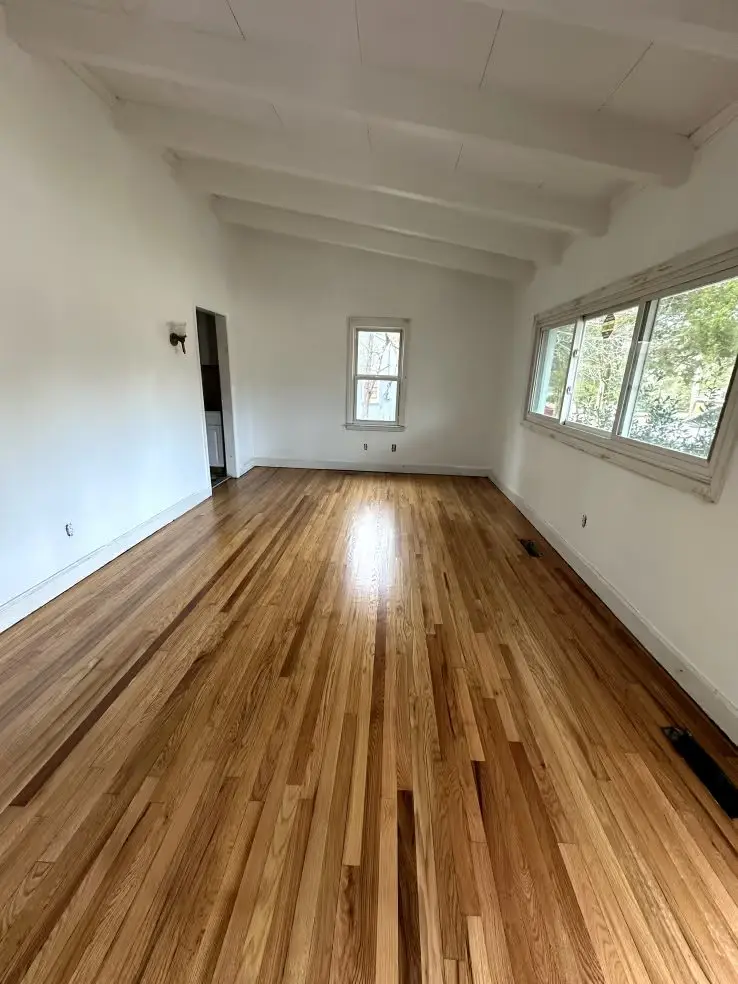
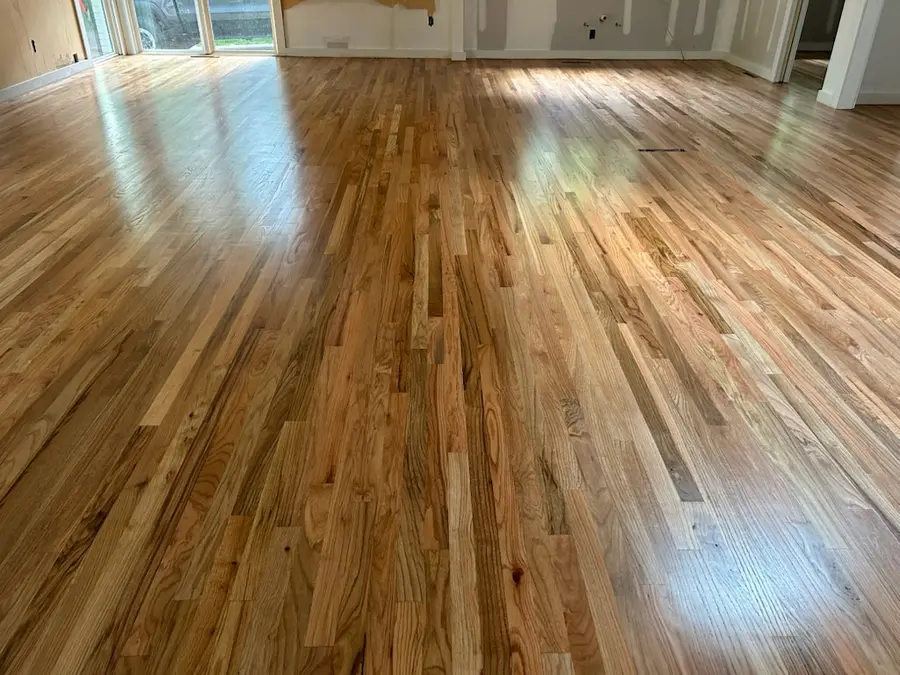
Look at the table again. Refinishing an existing floor costs a fraction of what new solid hardwood does, and the result is still real wood. A lot of homes in North Raleigh, Cary and Knightdale were built in the 1980s and 1990s with site-finished red oak. Many of those floors have never been sanded, or were sanded once. They usually have plenty of wood left.
That's why our first question on any walk-through is whether the floor you already own can be saved. Sometimes the honest answer is no. Boards that have been sanded too many times, water damage that has gone through the subfloor, or a floor that was never real wood in the first place all point toward new material. But when refinishing will work, we'll tell you, even though it's the smaller job. Our post on whether to refinish or replace walks through how we make that call.
What Pushes a Refinish Toward the Top of the Range
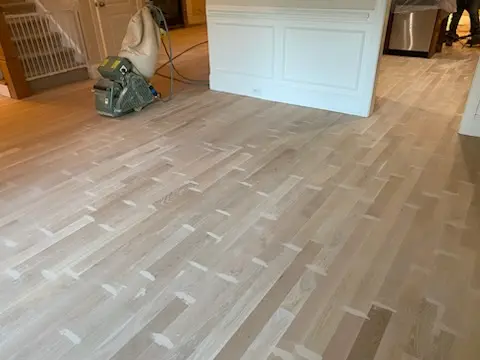
Two refinishing jobs of the same size can price very differently. These are the things that move the number most often in Triangle homes:
- Pattern work. Herringbone, chevron, borders and inlays take more time to sand evenly because the grain runs in several directions.
- Dark stains. Espresso and ebony colors show every sanding mark, so they need extra passes with finer grit and more careful hand work.
- Condition problems. Pet stains, deep gouges, old water marks and loose boards add repair time before sanding can even start. Our floor repair page covers what that involves.
- Old finishes. Wax, heavy polyurethane build-up or a previous bad sanding job can take extra work to remove cleanly.
- Stairs and landings. Every tread is sanded by hand, so stairs are priced separately from open floor.
What New Hardwood Really Costs
When a floor can't be saved, or there's no wood to save, new hardwood is the next conversation. Turnkey site-finished solid hardwood runs $15 to $25 per sq ft in this market. That covers the material, the moisture checks, acclimation, installation, and the sanding and finishing that happen after the boards are down. Engineered hardwood comes in lower because the product usually arrives prefinished and installs faster.
Material choice moves the price more than anything else. Select-grade white oak in wide planks sits at the top. Character-grade boards with knots and color variation cost less and hide wear well. On our hardwood installation page we explain how we match species and grade to the room rather than to whatever is sitting in a warehouse.
Want a real number for your floor instead of a range?
Get a free estimateStairs Are Their Own Line Item
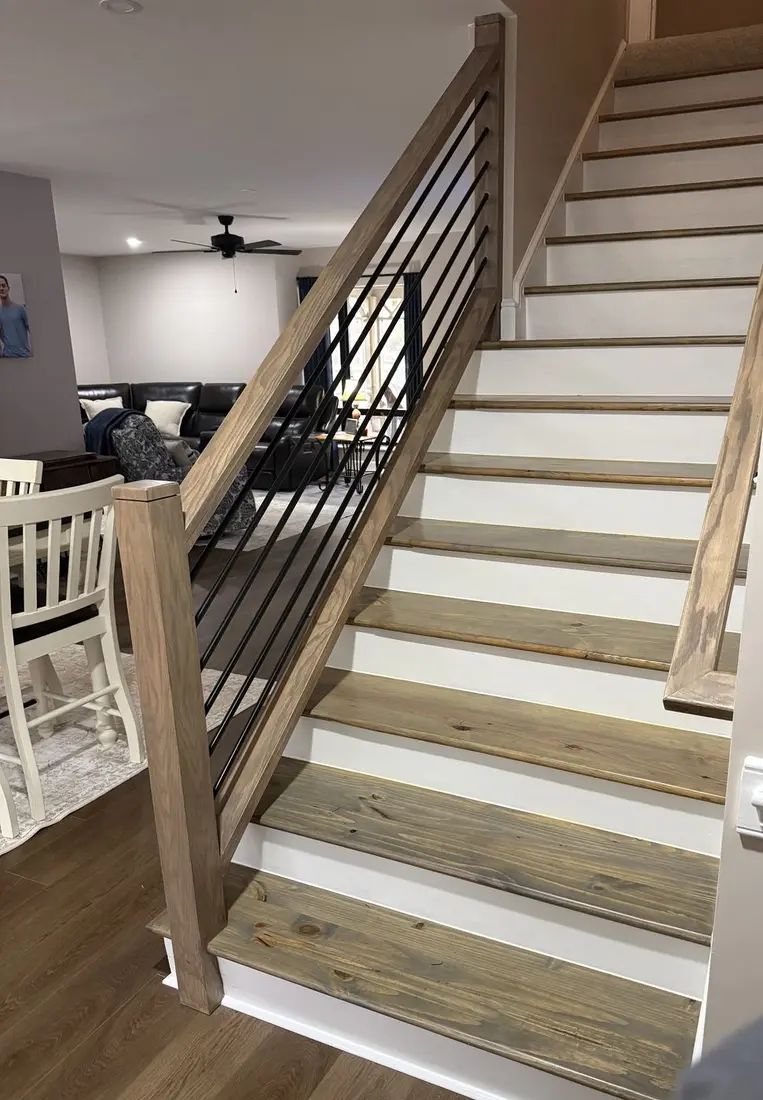
Published Raleigh-area ranges for staircase makeovers run from about $2,500 for straightforward tread-and-riser work to $8,000 and beyond for full rebuilds with new rails or floating treads. Stairs take a lot of labor. Each tread and riser is cut and fitted by hand, and the nosing has to line up perfectly or it looks wrong from the front door. If your stairs are part of the plan, ask for them to be priced as a separate line so you can see exactly what they add.
How to Compare Flooring Quotes
Ranges let you sanity-check any bid. When you have quotes in hand, look for these things:
- One complete price that includes prep, repairs you've discussed, finish coats and cleanup.
- The number of finish coats and the type of finish being used.
- Whether furniture moving and old floor removal are included or extra.
- A clear statement of what happens if hidden damage turns up once the old flooring is off.
- Who is actually doing the work. With us, it's Eric Ferrer's own crew, and Eric stays in touch from walk-through to final coat.
A very low number is worth a second look. A bad sanding job takes years off a floor, and a lot of our work comes from fixing jobs that were priced cheap and done fast. You can read about a few of those rescue jobs on our reviews page.
Getting an Exact Price
Ranges get you oriented. To get an actual price, someone has to look at the floor: the species, how much wood is left above the tongue, what the subfloor is doing, and how the rooms connect. That's what our free in-home estimate is for. We serve homes across Raleigh, Durham, Cary, Chapel Hill and the rest of the Triangle, and we'll give you a straight answer about what your floor needs, even when it's the more affordable one.